


Blog
Generator vs Solar in Lebanon: Save More with Roukoz Electronics

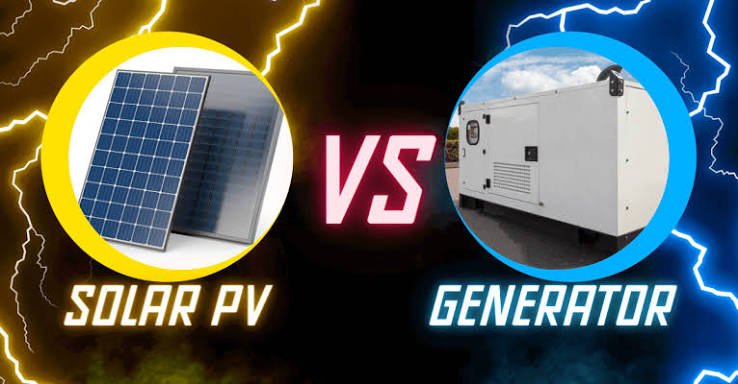
If your generator subscription bill has felt less predictable than usual this year, it’s not just you. From February to March 2026, the official generator tariff rose by more than 34%. The rise was driven almost entirely by increasing diesel prices. Diesel now accounts for roughly 82% of private generator operators’ spending to produce your electricity. This estimate comes from World Bank data cited by the Arab Reform Initiative. Thus, when fuel prices move, your bill changes, whether you asked for that or not.
That volatility explains why many people ask this question today. Would switching some or all of that dependence to solar save money? Or is it just a different kind of expensive? Here’s the real math.
What a Generator Subscription Actually Costs You Each Month
Lebanon’s generator billing splits into two parts. If we keep them separate, confusion from mixing them up drops. A fixed monthly flat rate depends on your subscribed amperage. As of July 2026, it is about $4.29 for 5A and $7.64 for 10A. Then, on top of that, you’re billed per kilowatt-hour actually consumed. That per-kWh rate is tied directly to diesel prices.
That usage-based rate is where the real cost — and the real unpredictability — lives. The usage-based rate drives the real cost and unpredictability. Two households with identical amperage can have very different bills. This depends on how much they run during EDL’s off hours.
Why Generator Costs Keep Swinging (and Probably Won’t Stop)
The Ministry recalculates generator tariffs monthly due to diesel price changes. Diesel prices in Lebanon have shown instability. This linkage means monthly costs vary with diesel. The jump from February to March 2026 wasn’t a one-off. It reflected a broader spike in fuel costs tied to regional instability. Generator pricing is structurally linked to diesel. No version of this system keeps your monthly cost flat year after year. It moves when diesel moves, and lately, that’s been often.
Ref: Navigating the Energy Shock: Electricity and Social Equity in Lebanon – Arab Reform Initiative
What Solar Actually Costs You (Once, Not Every Month)
Solar flips the cost structure entirely. Instead of a recurring bill tied to a fuel price you have no control over, you’re paying once for equipment that then generates power at effectively zero marginal cost for the next 25-plus years. There’s no diesel line item, no monthly ministry tariff update, no surprise 34% jump because of something happening at a refinery or a shipping route.
The upfront cost depends on how much of your load you cover. This is the part most people get wrong before they request a quote. If you haven’t already, check our step-by-step guide to sizing a solar system. It walks through calculating your real daily consumption first. That helps you price a system built around essentials, not guess and overpay.
The Real Trade-Off Isn’t Just Cost
Cost is only part of the comparison. A generator, once it’s running, can power your entire home, including AC, oven, and washing machine. Thus, it can do so for as long as fuel is available. A solar setup sized around your essential loads (fridge, lighting, router, water pump) typically won’t cover heavy appliances unless you’re willing to invest in a significantly larger, more expensive system.
On the other side, solar doesn’t care about diesel shortages, doesn’t require fuel runs, and doesn’t come with a monthly bill that can spike overnight because of events entirely outside Lebanon. A generator is more flexible in what it can power; solar is more stable in what it costs.
So Which One Actually Saves You Money?
For covering essential loads specifically, solar tends to win over a multi-year horizon, and the gap gets wider every time generator tariffs climb, since your solar system’s cost is already locked in while generator costs keep compounding. For full-home coverage including heavy appliances, the comparison gets closer, and it comes down to your specific system size and how much you’re currently paying in generator fees to run those same appliances.
In practice, most of our customers don’t pick one over the other completely. The common setup we help people build is solar covering the daily essentials, with the generator kept as backup for heavier loads or extended cloudy stretches — reducing generator dependence rather than eliminating it entirely, and taking the worst of the tariff volatility off your monthly bill in the process.
Frequently Asked Questions
How much does a generator subscription actually cost per month in Lebanon? It depends on your amperage and how much you consume. As of mid-2026, fixed monthly fees run around $4.29 for 5A and $7.64 for 10A, plus a per-kWh usage charge that changes monthly based on diesel prices — that usage charge is typically the larger part of the bill.
Why do Lebanese generator prices change every month? The Ministry of Energy and Water recalculates the tariff monthly based on current diesel prices, since diesel makes up the large majority of what it costs generator operators to produce electricity. When diesel prices move, your bill moves with them.
Is solar actually cheaper than a generator subscription? For essential loads specifically, often yes over a multi-year period, since solar has no recurring fuel cost. For full-home coverage including heavy appliances, it depends on your system size — the fairest comparison is against your actual current generator spend on those same appliances.
Do I have to choose between solar and a generator? No. Most households in Lebanon end up running both — solar for daily essentials, generator as backup for heavier loads or when there isn’t enough sun. It’s rarely all-or-nothing.
For a guide on choosing how many solar panels you need, check out our blog post Solar Panel: How Many Do You Need? Lebanon Sizing Guide