
If you’re choosing an inverter battery for your home in Lebanon, start with what you want to keep running when Électricité du Liban (EDL) or your building’s generator is off. Write down how much power those devices use, how many hours you need them, and when the battery can recharge. Then check the battery voltage and charging requirements against your inverter.
As a starting point, at an average load of 120 watts, a fully charged 12V 100Ah lead-acid battery gives about 4½ hours in the simplified example below. A 12V 200Ah battery gives about 9 hours under the same assumptions. If you’re also backing up a fridge, check both its average energy use and whether the inverter can handle the compressor starting.
How long will a 100Ah or 200Ah inverter battery last?
These are planning estimates for a single 12V battery. The appliance combinations illustrate what each load could look like. Use your own readings when sizing a system.
| What you want to keep running | Example average load | 12V 100Ah | 12V 200Ah |
|---|---|---|---|
| Wi-Fi, a few LED lights and phone charging | 50 W | About 11 hours | About 22 hours |
| Laptop, monitor, Wi-Fi and lights | 120 W | About 4½ hours | About 9 hours |
| Fridge, Wi-Fi, lights and a fan | 180 W | About 3 hours | About 6 hours |
How the estimates were calculated. Multiply battery voltage by amp-hours to get nominal watt-hours. Then multiply by the share of capacity you plan to use and the inverter’s conversion efficiency. Divide the result by average load in watts. For the 100Ah example at 120 W, the calculation is 12 × 100 × 0.50 × 0.90 ÷ 120 = 4.5 hours.
The table assumes a full starting charge, 50% of nominal capacity used and 90% conversion efficiency. It excludes the inverter’s own standby draw and any reduction in capacity at higher discharge rates. A partially charged or older battery can run for less time. At very light loads, the inverter’s own consumption can make a noticeable difference. For a specific model, check the manufacturer’s discharge tables and recommended operating limits. Victron Energy on battery capacity and discharge rate
How to size backup for a fridge and other essentials
- List the devices you’ll run during the cut. Include the Wi-Fi router and fibre box if you use both. For devices that stay on, multiply their watts by the hours you need them. An 80 W load over four hours uses 320 Wh.
- Measure the fridge over a normal day. A plug-in energy meter can show watt-hours over 24 hours. If the meter records 1.2 kWh over that period, the fridge averaged 50 W for that day. Room temperature, door openings and the part of the day when the outage occurs can change the result.
- Check the inverter’s continuous and surge ratings. The battery bank supplies energy over time. The inverter also has to support the devices running together and the short burst of power when a compressor starts. Ask your installer to check the battery bank’s ability to supply that burst as well.
- Confirm the inverter’s DC battery voltage. A 12V battery on its own fits a system designed for a 12V battery input, subject to the other specs. A 24V or 48V inverter needs a compatible bank at its required voltage. If you already have an inverter, take a photo of the model label before shopping. Roukoz inverter range
Gel vs tubular inverter batteries
| Battery type | When to consider it | What to check |
|---|---|---|
| Sealed gel | You want a deep-cycle battery without routine water top-ups. | Check the supported gel charging profile, charge current, discharge rating and installation requirements. |
| Flooded tall tubular | You want a battery for regular backup use and have a suitable, ventilated space with access for maintenance. | Check the manufacturer’s watering and charging instructions, as well as the space needed to service the battery. |
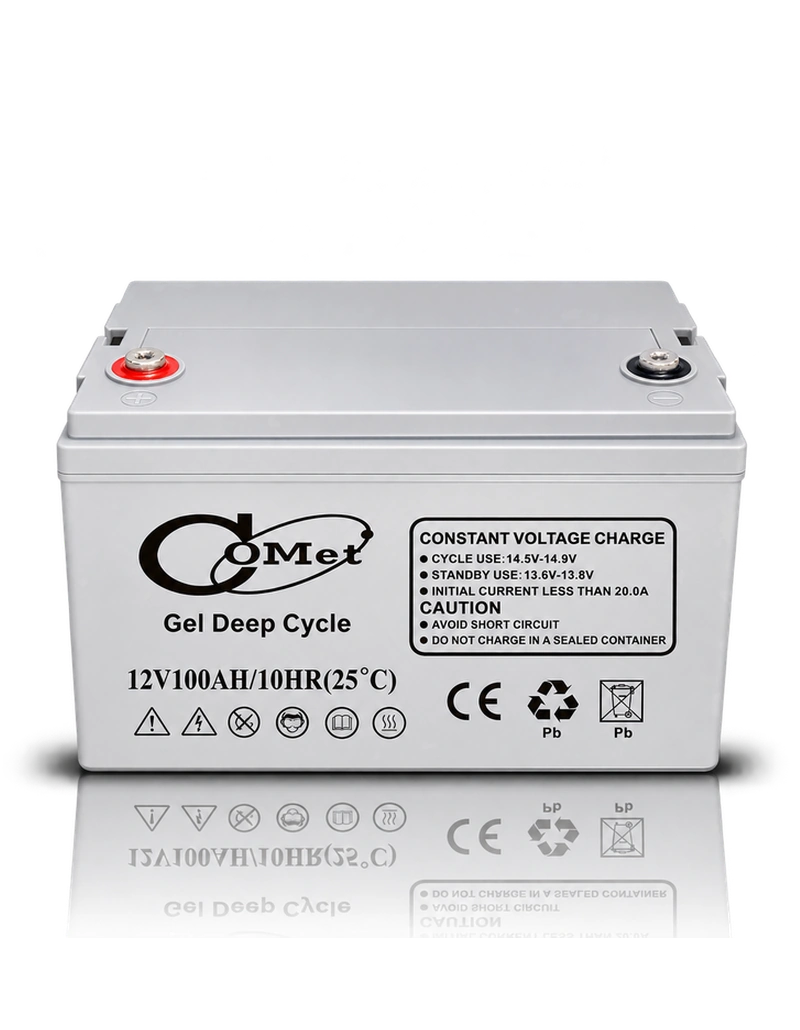
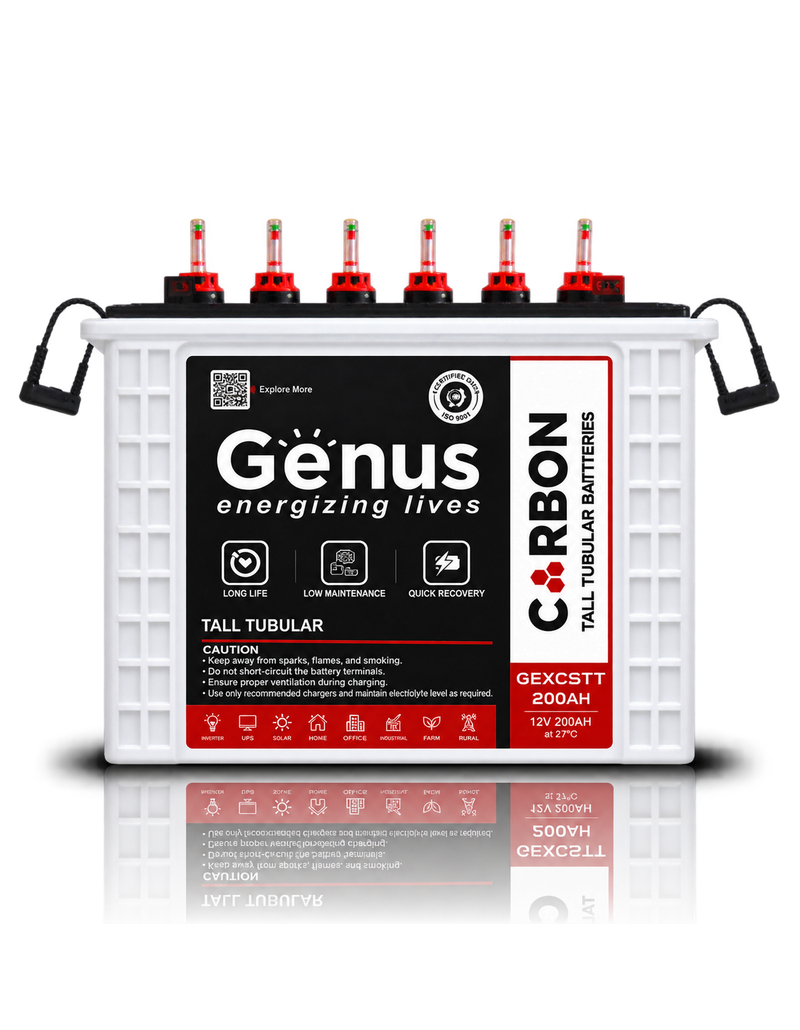
Two catalog examples are the Comet 12V 100Ah gel battery and the Genus 200Ah tall tubular battery. The Comet photo shows a 10-hour rating on the label, and the Genus listing specifies 200Ah at C10, also a 10-hour rating. When comparing other batteries, check the rate beside the Ah figure. A rating measured over 20 hours can differ from the rating measured over 10 hours, even for the same battery. Comet 100Ah product details · Genus 200Ah product details · Trojan Battery maintenance guidance
Will the battery recharge before the next cut?
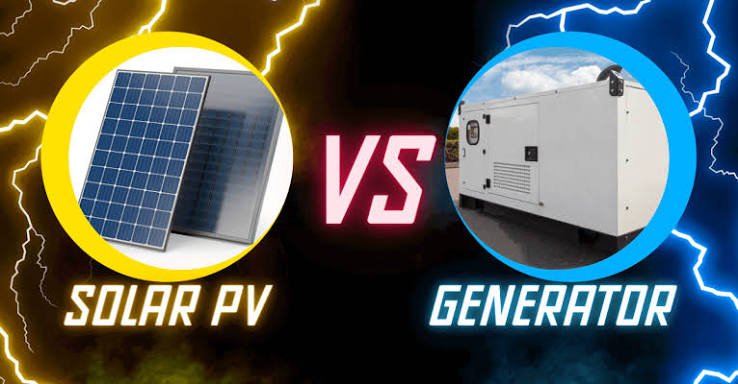
Check how long EDL, the generator or solar charging is typically available between outages. A larger battery can give you more time on backup, but the energy you use still needs to be put back before the next cut. With lead-acid batteries, charging current tapers during the absorption stage, so a short charging window can leave the bank partly charged even when the initial charging rate looks sufficient. Ask your installer to check your charger’s settings, available current and the battery maker’s limits against a typical day. Victron Energy on lead-acid charging stages and recharge time
How to choose a replacement UPS battery.
What to send when asking for a battery quote
Send your inverter model, the appliances you want to run, how many hours of backup you need and how long power usually returns between cuts. If you have a battery already, include a photo of its label. With those details, our team can check which models fit your setup and confirm availability. Browse inverter batteries · Contact Roukoz Electronics