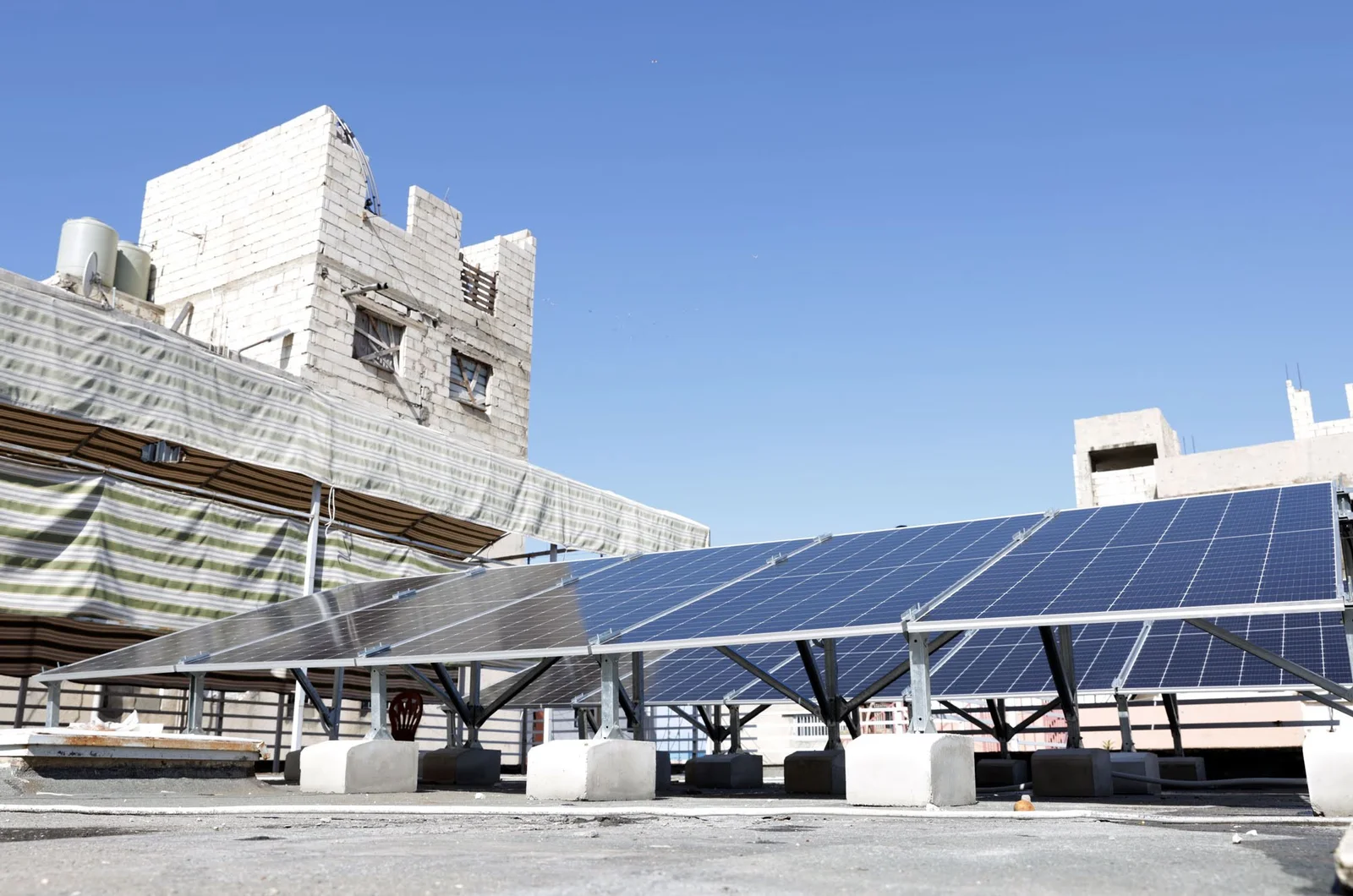
Choosing a solar inverter in Lebanon starts with the equipment you want to keep running when EDL or your generator is off. List those appliances, calculate their highest simultaneous load, and check motor startup requirements. Then match the inverter to your battery bank, solar panels and available charging sources.
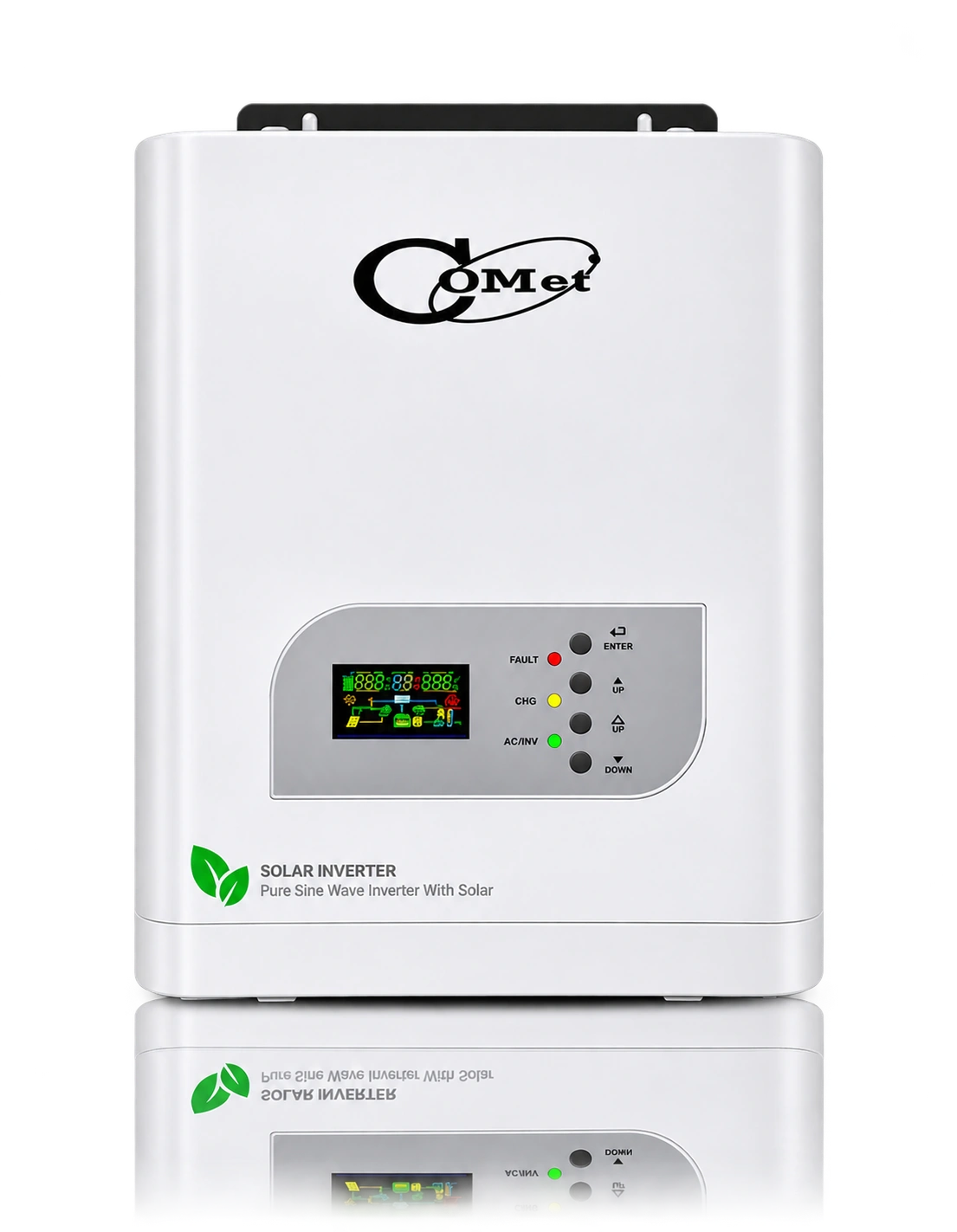
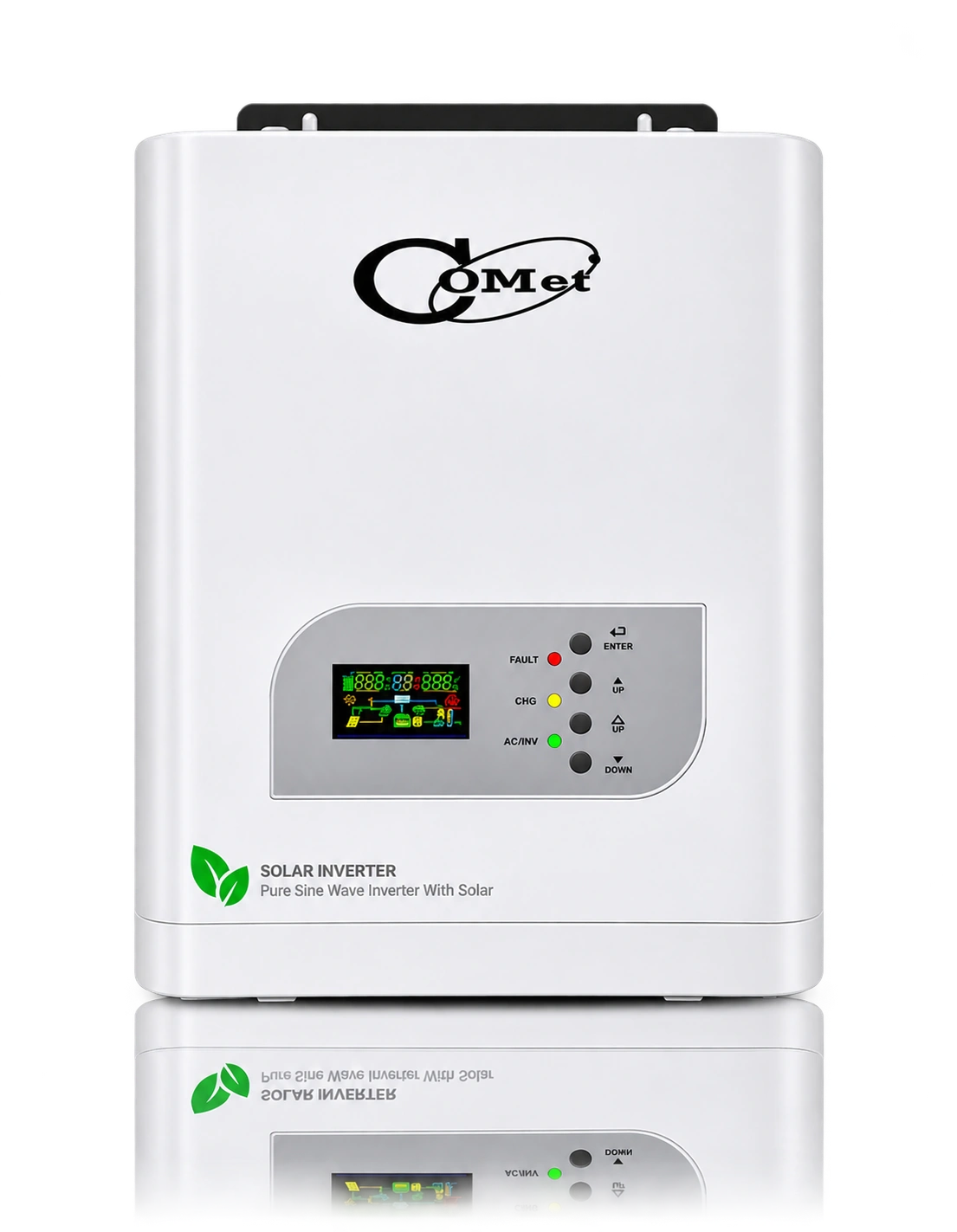
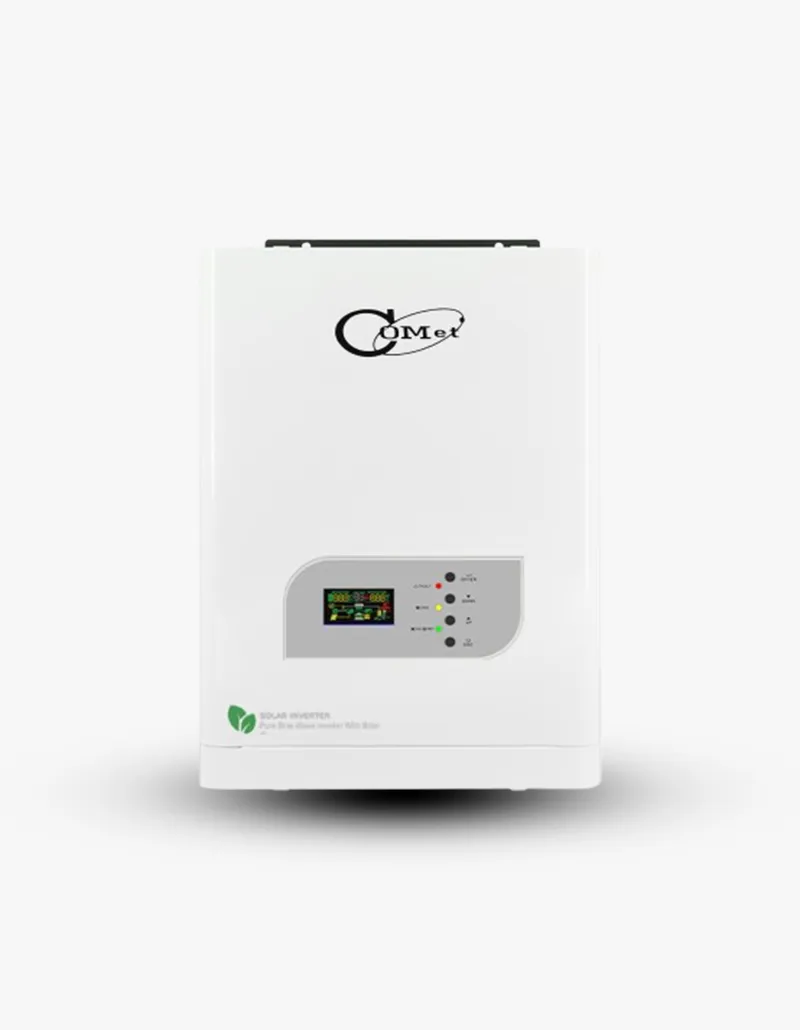
The most useful comparison is between the continuous watts, kVA rating, surge capability and battery voltage of specific models. For example, Roukoz's Comet 3.5kVA listing specifies a 24V battery input, while its Comet 5.5kVA listing specifies 48V. That change affects the battery bank you need. Comet 3.5kVA specifications · Comet 5.5kVA specifications
What size solar inverter do you need?
Start with a list of the devices that will share the backup circuit. For each one, record the running power in watts and whether it has a motor or compressor. Consider how the circuit is actually used. A kettle switched on while the fridge and water pump are running creates a different requirement from lights and Wi-Fi alone.
The examples below show how to organize that list. The wattages are illustrative inputs for the calculation. Replace them with appliance labels, measurements and startup data before choosing equipment.
| Example backup circuit | Assumed devices running together | Total running load | What to check next |
|---|---|---|---|
| Apartment essentials | Fridge 150W, lights 40W, Wi-Fi equipment 20W, TV 100W, fan 60W | 370W | Fridge startup surge and the battery energy needed for the outage |
| Home with a water pump | Apartment essentials 370W plus a 750W pump | 1,120W | Pump startup, possible fridge startup at the same time, and surge duration |
| Small office | Four workstations at 150W each, networking 40W, lights 60W | 700W | Actual workstation demand, power factor and any printers on the circuit |
In the pump example, if the pump needs 2,250W briefly at startup, the other 370W brings the short-duration load to 2,620W. That assumed startup figure must be replaced with the pump's real data. An inverter selected for this example needs a sufficient continuous output and a surge rating that covers the actual startup time. Battery discharge capability also has to support the event. Victron inverter selection guidance
Write down any air conditioners, washing machines or other large appliances you plan to add. A quote based on today's lights and fridge may need to change if those loads will also run during cuts. For a business, identify the circuits essential to trading before sizing the backup supply.
kVA vs kW when comparing solar inverters
The kVA rating describes apparent power. kW describes real power delivered to the load. Read both ratings in the inverter's datasheet, including the continuous rating at the expected operating temperature. For a load with power factor 0.8, 1,000W corresponds to 1,250VA. Use each appliance's specified power factor when calculating its apparent power.
Compare the continuous W and VA limits separately against your equipment. A product named 5.5kVA needs a confirmed continuous watt rating before you can decide whether it will run a 5,000W load. Also check how long the inverter supports its quoted peak output. Victron on watts, VA and power factor
Hybrid, off-grid or on-grid solar inverter?
| Type | What the system is intended to do | The question to ask before buying |
|---|---|---|
| On-grid inverter | Supply solar energy while connected to the utility grid | What equipment is required to provide backup when the grid fails? |
| Off-grid inverter or solar inverter/charger | Supply a local AC circuit from a compatible DC system, often with battery charging | Can this model accept your EDL or generator supply and charge the chosen battery? |
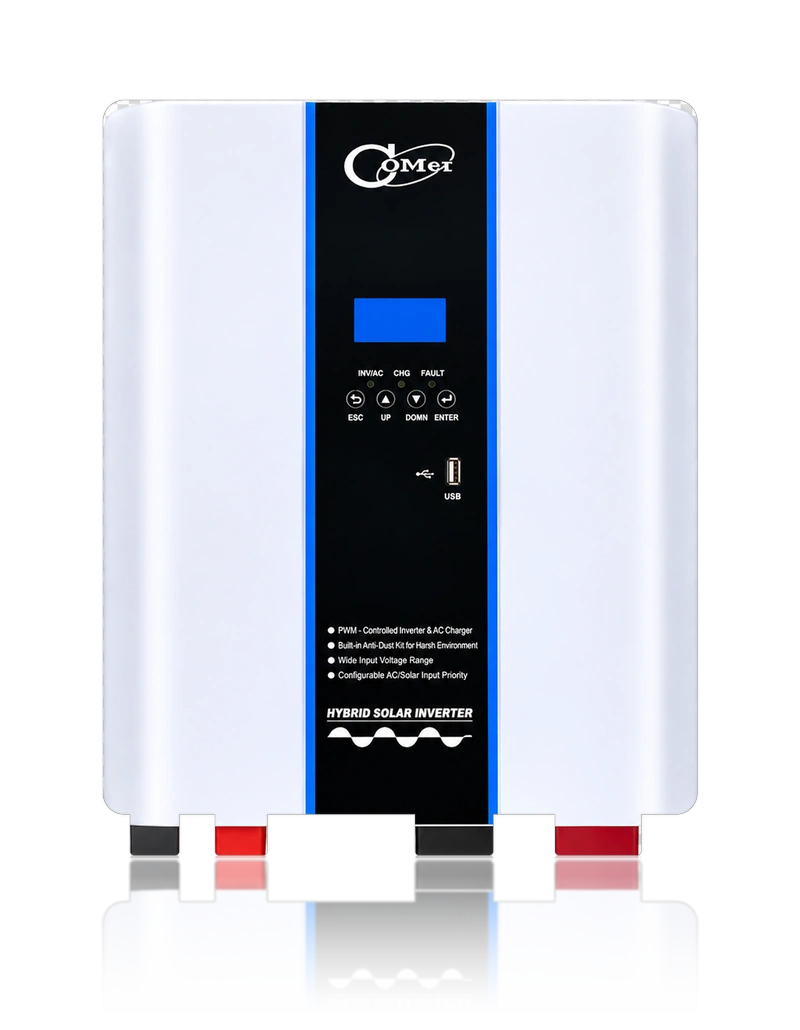
| Hybrid inverter | Manage solar and battery operation, with grid interaction depending on the model | What backup output, battery compatibility and changeover equipment does this model support? |
Check what happens when EDL disappears. Ask which circuits will remain supplied, what the backup output can deliver, and whether additional transfer equipment is needed. SMA's backup documentation explains that its system disconnects the home from the utility supply and creates a separate backup grid. The word “hybrid” alone leaves several installation details to confirm. SMA on automatic backup operation
Comparing Comet solar inverter specifications
These examples use the specifications listed in Roukoz's catalog. Confirm the supplied model's current datasheet when requesting a quote.
| Listed model | Listed apparent-power capacity | Battery DC input | Listed MPPT operating range | Listed maximum PV open-circuit voltage |
|---|---|---|---|---|
| Comet 3.5kVA | 3,500VA | 24V | 30–150V DC | 150V DC |
| Comet 5.5kVA | 5,500VA | 48V | 60–150V DC | 150V DC |
| Comet 6.5kVA | 6,500VA | 48V | 64–150V DC | 150V DC |
The battery input and PV input are separate specifications. A 48V battery system can have a different solar input voltage range. For each shortlisted model, ask for the continuous watts, surge duration, PV current and power limits, AC charging limits, and operating-temperature derating. Comet 3.5kVA · Comet 5.5kVA · Comet 6.5kVA
Should you choose a 24V or 48V battery bank?
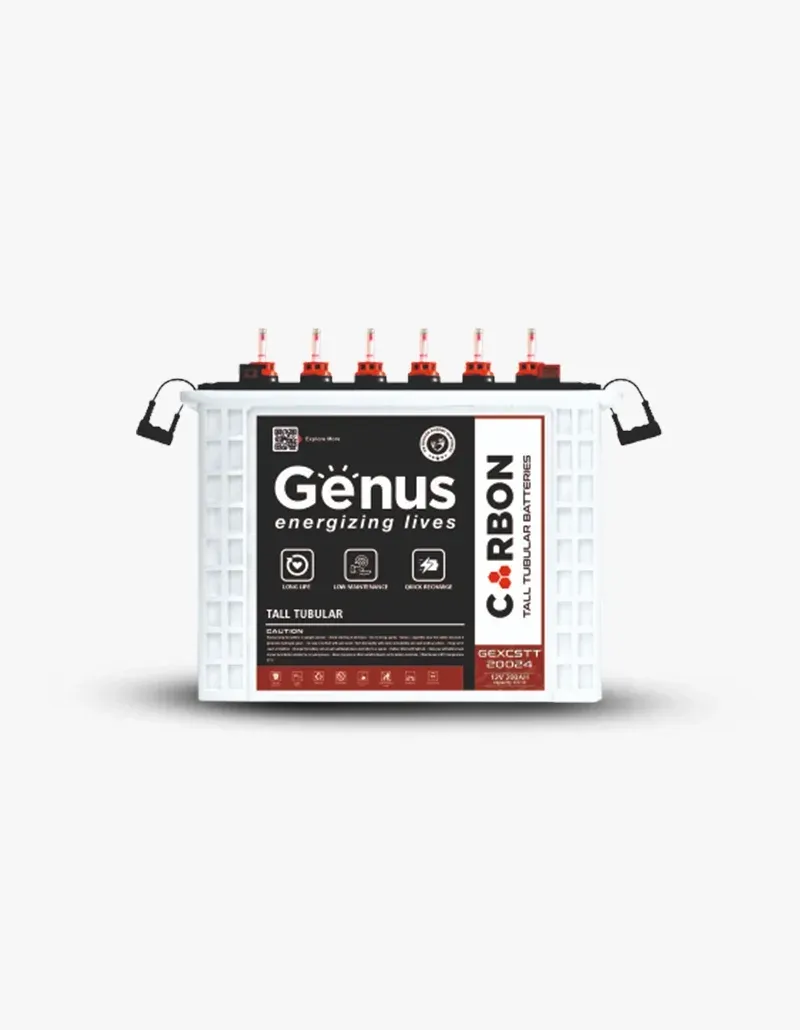
If you're replacing an inverter, check the voltage of the existing battery bank before choosing a new model. Two matched 12V batteries in series form a nominal 24V bank. Four form a nominal 48V bank. With a series connection, voltage increases while the Ah capacity remains the same. Your installer should confirm the arrangement, battery condition and manufacturer requirements before reusing a bank. Victron on series and parallel battery banks
Battery type matters too. Ask the supplier to confirm charge settings for gel or flooded tubular batteries. For lithium, confirm the supported battery models, BMS communication where required, and continuous and peak discharge limits. Use the inverter and battery manuals together to check the proposed pairing. Victron inverter and battery matching guidance
How long will the solar inverter run during a power cut?
Calculate the energy in the battery bank as well as the inverter's output capacity. As an illustrative calculation, a 24V 200Ah bank stores 4,800Wh nominally. Using 50% of that capacity at an assumed 90% conversion efficiency gives 2,160Wh for the load. At a steady 300W, that works out to about 7.2 hours, before accounting for inverter standby consumption, battery condition or discharge-rate effects.
Treat that figure as a planning estimate. Check the battery maker's usable capacity and discharge tables for the intended load, and how much charge the bank will have when the cut begins. Our battery guide gives further examples for household essentials. Inverter battery sizing and runtime guide
What to check for EDL and generator charging
Give your installer the subscribed generator amperage, appliances likely to run during charging, and usual charging window between outages. Ask them to check the inverter's permitted AC input voltage and frequency, generator compatibility, and the settings available to limit charging demand.
With a limited generator connection, both household loads and battery charging draw from the supply. At an assumed 230V, a 5A connection corresponds to 1,150VA. Your installer must account for the full connected demand and charging behaviour when selecting settings. A larger charger still needs enough available supply and time to replenish the battery. Victron on inverter/charger configuration and AC input limits
Will your solar panels work with the new inverter?
Take the panel model and existing string layout to your supplier. The installer needs to check PV open-circuit voltage at the lowest design temperature, the MPPT operating range, and the inverter's input current and power limits. Panels connected in series add voltage, so panel count and total wattage are only part of the compatibility check. Use the manufacturer's sizing method and limits for the exact inverter. Victron on solar array voltage and MPPT matching
If you're planning a new array, the panel sizing guide explains how to start from your daily energy use. How many solar panels do you need in Lebanon?
Ask for a solar inverter matched to your setup
Send Roukoz your appliance list, the equipment you want to run together, your existing inverter and battery labels, and any panel details. Include the backup hours you need and your generator subscription if you have one. Our team can help compare the listed equipment and confirm the specifications and availability for your project. Browse solar inverters · Contact Roukoz Electronics